
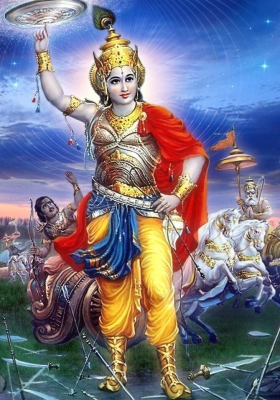
GOD AND HIS ATTRIBUTES -222
God is omnipresent, powerful, eternal and all pervading conscious live intelligence that drives the cosmos.
The ancient Vedic culture and Srimad Bhagvat Gita which dates back to 5000 years believes that nature is the manifestation of God.
The understanding of God imbibes
love and attitude of gratitude towards self, all living beings & environment,
thereby bringing righteousness in one’s action (karma),
resulting in the state of blissfulness in the individual
and establishing a society ensuring peace, justice and equality
with fraternity among all.
1. With the above introduction in the background, let me put forth few questions in this regard.
What is God?
What are His attributes?
Does God really exist?
These questions are hunting the mankind of all faiths for ages. Almost all human beings ponder over these questions till death since they develop sense of understanding. The author in the present article makes an effort to answer above questions. In the present scientific age and age of reasoning, it will be appropriate to mention opinion of of the renowned scientist regarding the driving force that keeps the cosmic world moving.
Let me quote Albert Einstein,
“To sense that behind everything that can be experienced there is something that our minds can not grasp, whose beauty and sublimity only reaches us indirectly; that is religiousness. In this sense and in this sense only, I am a devoutly religious man”.2
Einstein believes “The cosmic religious feeling is the strongest and noblest motive for scientific research.3
“I believe in Spinoza’s God who reveals himself in the lawful harmony of all that exists.”4
- 2 -
Dutch philosopher Baruch Spinoza (24 November 1632 – 21 February 1677), one of the foremost exponents of 17th century Rationalism and one of the thinkers of the Enlightenment argues that there is only one substance, which is absolutely infinite, self-caused, and eternal. He calls this substance "God", or "Nature". In fact, he takes these two terms to be synonymous (Latin phrase he used is "Deus sive Natura")5.
The ancient Vedic culture and Srimad Bhagvat Gita which date back to 5000 years ago believes that nature is the manifestation of God. God is omnipresent, powerful, eternal and all pervading conscious live intelligence that drives the cosmic world. Being all pervading it remains inside and outside of every thing that we see around. Spinoza’s idea of God endorsed by Einstein is the echo of the concept of Godhood as professed in Srimad Bhagvat Gita.
The present article with the teachings from Srimad Bhagvat Gita, the Holy book of Hinduism, delivered by Lord Krishna himself is an attempt to answer above questions in the perspective of both science and religion. It will highlight scientific aspects of Gita.
Srimad Bhagvat Gita acknowledges that God remains in unmanifested form in nature. God and nature are synonymous. It is all pervading and powerful cosmic life energy that is source of all living beings. It is too subtle that present scientific knowledge is grossly insufficient to identify. In other words we can say that scientific experiments being mechanical/chemical in nature is not able to appreciate interaction between cosmic life energy and physical world which is bio-mechanical in nature. The science is not able to explain the generation of life on earth and why one out of two entities (having similar physical conditions) die while other continue to live. At times, one entity with lower physical conditions (lower vitality) continues to live while other with better conditions die. The study and scientific analysis of attributes mentioned in Srimad Bhagvat Gita would provide a pathway to explain above paradox.
Attributes of God as in Srimad Bhagvat Gita
2. Srimad Bhagvat Gita has aptly answered above questions. It brings out What is God and What are His attributes? Following are attributes of God.
(a) God is conscious live energy or conscious live intelligence.
(i) God is subtle energy and is incomprehensible. He is very far and also very near - सूक्ष्मत्वात्तदविज्ञेयं दूरस्थं चान्तिके च तत् - sukshmatvat tad avijneyam dura-stham chantike cha tat - Bhagvat Gita Chapter 13 sloka 16 (BG 13/16).
(ii) God is indivisible, yet He appears to be divided amongst living beings - अविभक्तं च भूतेषु विभक्तमिव च स्थितम् - avibhaktam cha bhuteshu vibhaktam iva cha sthitam - BG 13/17.
(iii) God is without beginning or middle or end; He has unlimited power -अनादिमध्यान्तमनन्तवीर्य - anadi-madhyantam ananta-viryam - BG 11/19.
- 3 -
(iv) God exists outside and inside all living beings, both moving and not moving - बहिरन्तश्च भूतानामचरं चरमेव च - bahir antash cha bhutanam acharam charam eva cha - BG 13/16.
(v) God is the life energy of all living beings - जीवनं सर्वभूतेषु - jivanam sarva-bhuteshu - BG 7/9.
(vi) God is the generating seed of all living beings. No creature moving or non-moving can exist without God - सर्वभूतानां बीजं तदहमर्जुन, न तदस्ति विना यत्स्यान्मया भूतं चराचरम् - sarva-bhutanam bijam tad aham arjuna, na tad asti vina yat syan maya bhutam characharam - BG 10/39.
(vii) God is the eternal seed of all beings - बीजं मां सर्वभूतानां - bijam mam sarva-bhutanam - BG 7/10.
(viii) God is the origin of all creations. Everything proceeds from Him - अहं सर्वस्य प्रभवो मत्त: सर्वं प्रवर्तते - aham sarvasya prabhavo mattah sarvam pravartate - BG 10/8.
(ix) The entire cosmos (that we observe) is pervaded by God in unmanifested (incomprehensible) form - मया ततमिदं सर्वं जगदव्यक्तमूर्तिना - maya tatam idam sarvam jagad avyakta-murtina - BG 9/4.
(x) All living beings dwell in God - मत्स्थानि सर्वभूतानि - mat-sthani sarva-bhutani - BG 9/4.
(xi) God remains equally disposed in all living beings. God is neither inimical nor partial to anyone - समोऽहं सर्वभूतेषु न मे द्वेष्योऽस्ति न प्रिय: - samo ’ham sarva-bhuteshu na me dveshyo ’sti na priyah - BG 9/29.
(xii) God has no sense organs, but He perceives all sense-objects - सर्वेन्द्रियगुणाभासं सर्वेन्द्रियविवर्जितम् - sarvendriya-gunabhasam sarvendriya-vivarjitam- BG 13/15.
(xiii) God is unattached to anything, yet He is the sustainer of all - असक्तं सर्वभृच्चैव- asaktam sarva-bhrich chaiva - BG 13/15.
(xiv) God is without attributes (liking or disliking), yet He enjoys all modes of material nature - निर्गुणं गुणभोक्तृ च - nirgunam guna-bhoktri cha - BG 13/15.
Deliberation
God is subtle conscious live energy (Krishna energy). It is the eternal generating seed (life energy) of all living beings. It is all pervading and is without beginning or middle or end and exists outside and inside all living beings, both moving and not moving. Everything proceeds from Him. It is indivisible, yet appears to be divided amongst living beings. The live energy is neither inimical nor partial to anyone and remains appropriately present in all living beings. No creature moving or non-moving can exist without this live energy. The entire cosmos is enveloped by the live energy like a womb in which all living beings take birth (appear), grow and die (disappear) like waves in the ocean. Unlike other known forms of energy (mechanical, chemical, nuclear, electromagnetic, etc), Krishna energy has life. It has no sense organs, but can perceive all sense-objects. It is unattached to anything, yet provides sustenance to all and is without liking/disliking, yet enjoys all modes of material nature.
- 4 -
(b) Nature is God.
(i) God is the sun amongst luminous objects and moon in the night sky - र्ज्योतिषां रविरंशुमान्, नक्षत्राणामहं शशी - jyotisham ravir anshuman, nakshatranam aham shashi - BG 10/21.
(ii) God is radiance of sun and moon - प्रभास्मि शशिसूर्ययो: - prabhasmi shashi-suryayoh - BG 7/8.
(iii) God is the brilliance of the sun that illuminates the entire solar system - यदादित्यगतं तेजो जगद्भासयतेऽखिलम् - yad aditya-gatam tejo jagad bhasayate ’khilam - BG 15/12.
(iv) God is the radiance of the moon and the brightness of the fire - यच्चन्द्रमसि यच्चाग्नौ तत्तेजो विद्धि मामकम् - yach chandramasi yach chagnau tat tejo viddhi mamakam - BG 15/12.
(v) God is warming the entire creation by his radiance - स्वतेजसा विश्वमिदं तपन्तम् - sva-tejasa vishvam idam tapantam - BG 11/19.
(vi) God is brilliance of fire - तेजश्चास्मि विभावसौ - tejash chasmi vibhavasau - BG 7/9.
(vii) Amongst the mountains, God is the Meru (tallest mountain system) - मेरु: शिखरिणामहम् - meruh shikharinam aham - BG 10/23.
(viii) God is ocean amongst reservoirs of water - सरसामस्मि सागर: - sarasam asmi sagarah - BG 10/24.
(ix) God is taste in water - रसोऽहमप्सु - raso ’ham apsu - BG 7/8.
(x) God radiates heat as sun. He withholds, as well as brings rain - तपाम्यहमहं वर्षं निगृह्णम्युत्सृजामि च - tapamyaham aham varsham nigrihnamyutsrijami cha - BG 9/19.
Deliberation
The nature is the God. God remains in nature in unmanifested form. God is the sun, the moon, the mountains and the oceans. The radiance of sun, moon and fire is the God. God is taste in water. God is the brilliance of the sun that illuminates the entire solar system. God is warming the entire creation by his radiance. He withholds, as well as brings rain. The above slokas clearly brings out that God and Nature are synonymous of each other as believed by great scientist Albert Einstein.
The above discussion indicates - God is the live energy responsible for functioning of cosmos, holds all building blocks of living beings together and make life possible on earth.
- 5 -
(c) God is Sustainer, Annihilator and Creator.
God is the Supreme Entity and the Sustainer, Annihilator and Creator of all beings - भूतभर्तृ च तज्ज्ञेयं ग्रसिष्णु प्रभविष्णु च - bhuta-bhartri cha taj jneyam grasishnu prabhavishnu cha - BG 13/17.
Deliberation
We can see nature creates all living beings, provides sustenance to grow and annihilates them. All living beings take birth in the womb of nature, gets sustenance from nature and the natural process/natural calamities result in their death/destruction. The live energy (Krishna energy) is all pervading. Being live energy, it is more homely to be within living systems. The more you trap this energy in living beings i.e. more you facilitate growth of living beings (moving and non-moving), higher is the stability in the ecosystem and will result in sustainable human civilization. The present industrialisation is resulting in wide spread destruction of ecosystem and environment. The number of living beings (plants, animals, insects, etc) are becoming extinct. The Krishna energy is released to the atmosphere. The change in climate and associated effect like increase in sea level and increase in number & ferocity of cyclonic storms are indications of destructive nature of this energy.
The world community have realised. A number of conventions and instruments are in place to accord priority for conservation of environment. However, lack of sense of gratitude and obligation towards environment does not bring desired result. The understanding of God would help in promoting love for living beings [God is the life energy of all living beings - para 2(a)(v) above] resulting in proactive conservation practices. This would restore balance in the ecosystem and would be beneficial towards sustainable human civilisation.
(d) God is the qualities in an entity.
(i) God is ability in human beings - पौरुषं नृषु - paurusham nrishu - BG 7/8.
(ii) God is intellect of the intelligent - बुद्धिर्बुद्धिमतामस्मि - buddhir buddhimatam asmi - BG 7/10.
(iii) God is splendor of the glorious - तेजस्तेजस्विनामहम् - tejas tejasvinam aham - BG 7/10.
Deliberation
The qualities (ability, intellect and splendor) in the living beings are due to the Krishna energy in the living beings.
- 6 -
Importance of Idolatry in Hinduism
3. Someone may have question - If Hinduism believes in God as all pervading divine energy, why do Hindus worship Murtis (idols)?
The important fact is - Hindus don’t worship murtis, they believe them to be Gods.
God, as discussed above, is the live divine energy that remains all around in unmanifested form (formless). The divine energy can be experienced through meditation. Meditation is nothing but the concentration of thought. The thought has two dimensions - content and direction. The meditation demands the content and direction to coincide. It is difficult for the mind to concentrate on formless divine energy. The murtis which are considered to be source of divine energy are worshiped for the purpose.
The murtis are consecrated (prana sthapana) through vedic rituals and are considered to have God (divine energy) dwelling in them. When devotees visit temple or home shrine, it brings purity in thought and action (karma), which help in connecting to all pervading powerful divine energy through murtis.
The essence of Hinduism lies in the fact that - worshiping in form with concentration on formless divinity.
Conclusion
4. Hinduism strongly believes that the worshiping God (faith in God) brings purity in thought and action (karma). The person performs karma without attachment and prejudice to any living and non-living entity around him. This is called yajna (act of sacrifice). Srimat Bhagavat Gita in Chapter 3 verse 15 states -
तस्मात्सर्वगतं ब्रह्म नित्यं यज्ञे प्रतिष्ठितम्
(tasmat sarva-gatam brahma nityam yajne pratishthitam),
which means - the all-pervading Lord is eternally present in yajna.
The efforts(yajna) promotes a state of blissfulness (calm and composed mental state) in the individual and help in achieving the aim. The karma (being without prejudice to any entity) remains in sync with the needs of environment and ecosystem. The healthy environment and ecosystem generates favourable conditions (healthy society, favourable climate, abundant availability of food, clean soil/water/air, resources, etc) to ensure sustainable human civilization.
- 7 -
The provisions of International conventions on environmental dimensions of sustainable developments since mid 20th century, 20 global Aichi biodiversity targets adopted in 2011, India’s 12 biodiversity targets and 17 Sustainable Development Goals adopted by UN in 2015 are the echoes of age old above vedic prescriptions.
ONE’S SAKARMA IS THE MEANS TO CONNECT TO GOD.
DEVELOPS STATE OF BLISSFULNESS.
INDIVIDUAL BECOMES A CONTRIBUTING MEMBER OF HEALTHY SOCIETY.
References
1. Swamy Tathagatananda, Albert Einstein, His human side, The Vedant society of New York.
2. Walter Isaacson, Einstein, His life and universe, Page 203
3. Walter Isaacson, Einstein, His life and universe, Page 390
4. Walter Isaacson, Einstein, His life and universe, Page 388
5. https://en.wikipedia.org/wiki/Philosophy of Spinoza
6. https://www.holy-bhagavad-gita.org
7. The Holy Geeta, Commentary by Swami Chinmayananda
8. Bhagavad Gita As it is, by His Divine Grace, A. C. Bhaktivedanta Swami Prabhupada
Brief on the author - The author has qualification M Sc (Physics), M Sc (Nautical Science), Diploma in strategy and Policy from US Naval War College and B ED. Has 30 years of experience in class I post in Policy development, Force Planning, Training, administration, Disaster Management, Maritime Security, etc. Has to his credit a number of awards and recognition and four patents under consideration.